
Iron and Cystic Fibrosis Lung Infections
P. aeruginosa is responsible for life-long and debilitating chronic lung infections in cystic fibrosis (CF) patients. Within the CF lung, P. aeruginosa evolves considerably and becomes increasingly resistant to antibiotic therapy. P. aeruginosa uses a variety of strategies to acquire iron, one of which relies on a small iron-scavenging molecule called pyoverdine. Pyoverdine is required for acute infections, but the ability of some P. aeruginosa strains to make pyoverdine is lost after several years of chronic CF lung infection. We previously showed that heme acquisition is enhanced in CF isolates over time, indicating heme is a more readily available source of iron in the CF lung. Our own studies have shown that antimicrobial activity of P. aeruginosa against Staphylococcus aureus, a common co-colonizer with P. aeruginosa, is enhanced in iron-depleted environments, indicating this “iron piracy” system is responsive to iron availability.
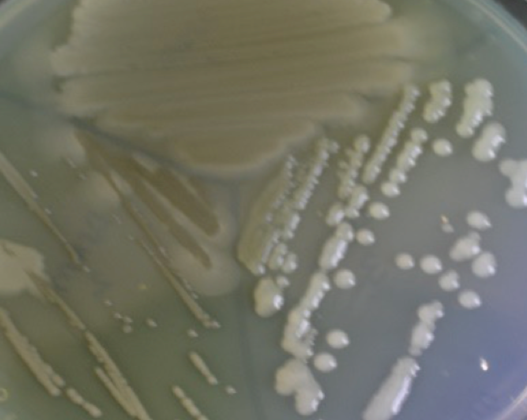
Longitudinal, clonal CF isolates of P. aerugionsa
Nguyen, et al, 2014
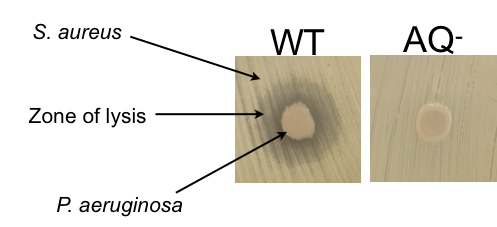
Nguyen, et al, 2016
Representative Publications
Nguyen AT, Jones JW, Cámara M, Williams P, Kane MA, Oglesby-Sherrouse AG. (2016) Cystic fibrosis isolates of Pseudomonas aeruginosa retain iron-regulated antimicrobial activity against Staphylococcus aureus through the action of multiple alkylquinolones. Front Microbiol 27(7).
Nguyen AT, Jones JW, Ruge MA, Kane MA, Oglesby-Sherrouse AG (2015) Iron depletion enhances production of antimicrobials by Pseudomonas aeruginosa. J Bacteriol 197(14).
Nguyen AT, O'Neill MJ, Watts AW, Robson CL, Lamont IL, Wilks A, Oglesby-Sherrouse AG. (2014) Adaptation of iron homeostasis pathways by a Pseudomonas aeruginosa pyoverdine mutant in the cystic fibrosis lung. J Bacteriol 196(12).
Oglesby-Sherrouse AG, Djapgne L, Nguyen AT, Vasil AI, Vasil ML. (2014) The complex interplay of iron, biofilm formation, and mucoidy affecting antimicrobial resistance of Pseudomonas aeruginosa. Pathog Dis 70(3):307-20.